Wat Phra Yai, better known as the Big Buddha Temple, is one of the most famous attractions in Koh Samui. Located on a small island called Koh Faan, which is connected to Samui by a causeway, this sacred site is home to a 12-meter-high golden Buddha statue. Built in 1972, the Big Buddha has become an iconic landmark that can be seen from far away, welcoming both travelers and locals to explore its cultural and spiritual beauty.

The Big Buddha statue at Wat Phra Yai represents the Buddha in the Mara posture, a symbol of purity, steadfastness, and enlightenment. This posture recalls the moment of the Buddha’s ultimate awakening under the Bodhi tree, making it a powerful image for Thai Buddhists and an inspiring sight for visitors. Many people come here to pay respects, make offerings, and experience the peaceful atmosphere that defines this Koh Samui temple.

Over time, Wat Phra Yai has developed into a center of devotion and a top tourist destination in Koh Samui. Visitors can explore smaller shrines, ornate statues, and rows of bells surrounding the main Buddha. Local monks live and practice here, and travelers can often witness traditional chanting or merit-making ceremonies. The temple not only offers cultural insight but also a chance to experience authentic Thai spirituality.
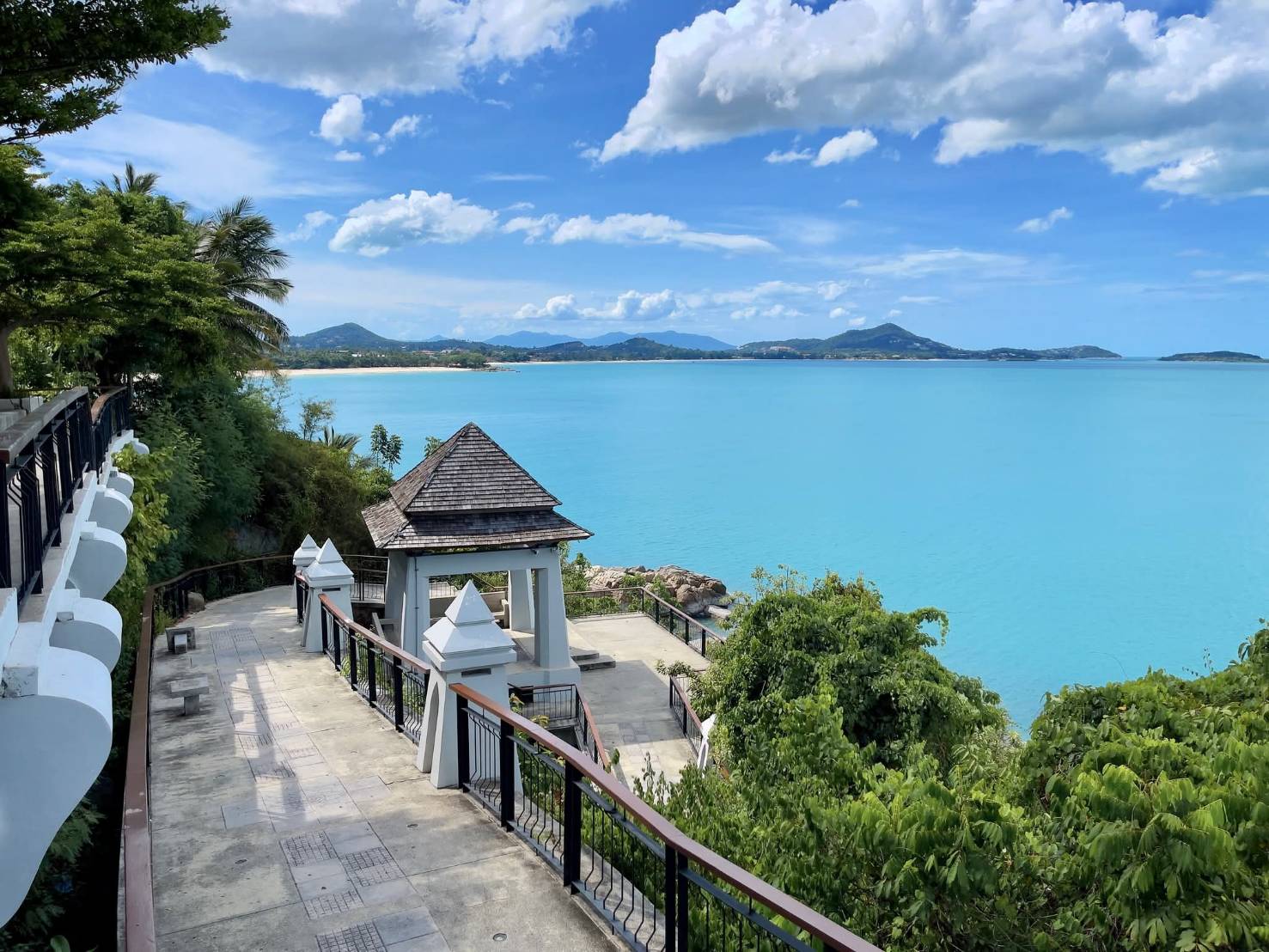
For tourists, the Big Buddha Temple is more than just a religious site — it is also one of the best viewpoints in Koh Samui. From the top of the staircase leading to the Buddha, visitors can enjoy panoramic views of the sea, nearby islands, and Samui’s coastline. Whether you are taking a half-day tour or a short taxi ride to Big Buddha, this temple provides an unforgettable combination of culture, history, and scenery.
Today, Wat Phra Yai remains one of the must-visit temples in Koh Samui. Travelers can easily book a taxi to Big Buddha from hotels or Samui Airport and spend time exploring this sacred landmark. Whether you are seeking cultural discovery, spiritual inspiration, or simply a beautiful photo spot, the Big Buddha Temple in Koh Samui offers a meaningful experience for every visitor.
What to See at the Big Buddha Temple, Koh Samui
Visiting Wat Phra Yai (Big Buddha Temple) is one of the most memorable experiences in Koh Samui. Apart from the famous 12-meter golden Buddha statue, the temple complex offers several cultural and spiritual highlights worth exploring. Here’s what you will see at the Big Buddha Temple:

The Majestic Golden Buddha
The main attraction is, of course, the giant 12-meter-high golden Buddha statue. Visible from miles away, this impressive figure represents the Buddha in the Mara posture, symbolizing enlightenment and inner peace.

Beautiful Staircase and Naga Serpents
To reach the statue, visitors walk up a grand staircase decorated with colorful naga (mythical serpent) sculptures. The intricate design makes the climb both spiritual and visually stunning.

Surrounding Shrines and Statues
Around the main Buddha, you will find smaller shrines, bells, and statues of various deities. Many visitors ring the bells for good luck and light incense as part of their prayers.
Phra Sangkajai at Big Buddha Temple, Koh Samui
When visiting the famous Big Buddha Temple (Wat Phra Yai) in Koh Samui, many travelers are surprised to find not only the iconic 12-meter golden Buddha but also other revered statues. One of the most unique and meaningful is the image of Phra Sangkajai (Phra Sangkachai), often called the “Laughing Monk” in Thailand.
Who is Phra Sangkajai?
Phra Sangkajai was one of the great disciples of the Lord Buddha, renowned for his deep wisdom and ability to explain complex teachings in simple words. In Thai temples, he is usually depicted as a smiling, plump figure with a round belly, symbolizing happiness, prosperity, and abundance.
While many visitors may confuse him with the Chinese Laughing Buddha (Budai), Phra Sangkajai is actually from the Theravada Buddhist tradition. His joyful appearance is believed to bring good luck, wealth, and loving-kindness to devotees who pay respect to him.

Buddha Postures for Each Day of the Week
In Thai Buddhist tradition, each day of the week is associated with a specific Buddha image, known as the “Buddha posture of the day.” These images reflect important events in the life of the Buddha and symbolize different teachings and qualities. Many Thai people believe that being born on a certain day of the week connects them to that posture, making it an important part of their spiritual identity.
For example, the Monday Buddha is in the posture of “calming conflict,” with one hand raised to symbolize peace and protection. The Tuesday Buddha depicts the posture of reclining, representing the Buddha entering Nirvana. The Wednesday Buddha actually has two versions: in the morning, the Buddha is shown holding an alms bowl, while in the evening, He is shown with an elephant and monkey offering food. Each posture carries its own meaning, from compassion and humility to wisdom and enlightenment.
These daily Buddha images can be seen in many temples across Thailand, including Wat Phra Yai (Big Buddha Temple) in Koh Samui. Visitors often look for the statue that corresponds with their day of birth and make offerings for good fortune. Learning about the Buddha posture of the day not only gives insight into Thai culture but also adds a deeper spiritual dimension to temple visits.

The Buddha Subduing Mara
This statue depicts the Buddha in the moment of Subduing Mara, one of the most significant events in Buddhist history. According to the legend, as Prince Siddhartha sat in deep meditation beneath the Bodhi tree seeking enlightenment, Mara — the lord of illusion and desire — attempted to disturb him. Mara sent his army of demons, terrifying creatures, and even tried to tempt him with illusions, but Siddhartha remained calm and unmoved.
In the scene, the Buddha is shown seated in meditation while Mara’s forces surround him. The earth goddess (Phra Mae Thorani) is often represented wringing water from her hair to wash away Mara’s army, symbolizing the triumph of truth and virtue over temptation and evil. The elephants, demons, and celestial beings around the statue represent the struggles and distractions that the Buddha overcame on his path to enlightenment.
This moment, known as the Victory over Mara, marks the Buddha’s final step before attaining enlightenment. The statue serves as a powerful reminder of inner strength, mindfulness, and the victory of wisdom over worldly desires. For visitors, it is not only a striking piece of temple art but also an inspiring story that lies at the heart of Buddhist teachings.


Thao Wessuwan
Thao Wessuwan, also known as Kubera in Hindu tradition, is a powerful guardian deity in Thai Buddhism. He is recognized as one of the Four Heavenly Kings (Chatulokaban) and holds the role of protector of the northern direction. In Thai belief, Thao Wessuwan is revered as the god of wealth, fortune, and protection, often depicted as a giant figure holding a club, symbolizing his power to drive away evil.
In Buddhist temples across Thailand, statues of Thao Wessuwan are often placed at entrances or within temple grounds. Devotees believe he guards against ghosts, demons, and negative energies, ensuring peace and safety for those who seek his blessings. People often make offerings of incense, flowers, and even coins to him, praying for prosperity, protection from harm, and success in life.
Over time, Thao Wessuwan has become one of the most popular deities among Thai Buddhists. His image is commonly found in amulets and statues, carried by worshippers as a source of spiritual strength. For visitors to Thailand, learning about Thao Wessuwan provides a deeper understanding of local faith and the way Buddhism in Thailand blends with ancient folklore and Hindu traditions.


Statues of Characters from the Epic of Phra Aphai Mani
Phra Aphai Mani is one of Thailand’s most famous epic poems, written by the great poet Sunthorn Phu, who is often called the “Shakespeare of Thailand.” He composed this literary masterpiece in the early 19th century, during the reign of King Rama II of the Rattanakosin era. Sunthorn Phu is highly respected in Thai culture for his storytelling, poetry, and ability to capture human emotions through traditional verse.
The story of Phra Aphai Mani is a long adventure filled with love, danger, and fantasy. The main character, Prince Aphai Mani, is trained not in traditional warfare but in playing a magical flute, which has the power to put listeners to sleep or even cause death. Throughout the tale, he encounters giants, sea creatures, beautiful princesses, and mystical beings. One of the most famous episodes is his encounter with a sea ogress and a mermaid, scenes that are often represented in statues and artworks across Thailand.
The epic combines Thai folklore, mythology, and moral lessons, making it both entertaining and educational. For Thai people, Phra Aphai Mani is more than just literature; it reflects cultural values, imagination, and the poetic genius of Sunthorn Phu. Today, the story remains popular, and visitors to Thailand may see statues inspired by the tale at temples, beaches, and cultural landmarks.
Visiting the Big Buddha Temple is a must-see experience in Koh Samui.
And booking a taxi with us makes your journey simple, safe, and stress-free.
Our professional drivers are punctual, polite, and familiar with the island’s routes, ensuring you arrive on time and in comfort. With clean vehicles, flexible booking options, and the convenience of paying in cash on the day of travel, we provide the easiest way to explore one of Koh Samui’s most iconic landmarks. Book your taxi with us today and enjoy a smooth ride to the Big Buddha Temple.
Inquiry for Taxi Transfer to anywhere in Koh Samui




Related Posts
If you enjoyed reading this, then please explore our other articles below: